FLIR THERMAL IMAGING TEMPERATURE SENSORS IN ACTION
See how companies and government agencies are using FLIR automation cameras to improve processes, monitor conditions, prevent fires, and more.
Fill out the form on the right to download the stories listed below.
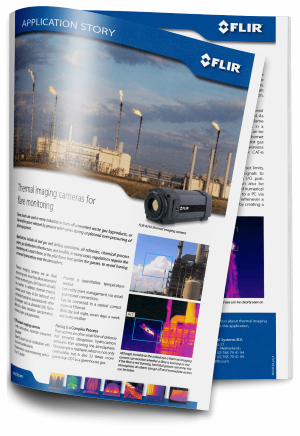
Thermal imaging cameras for flare monitoring
Flare stacks are used in many industries to burn off unwanted waste gas byproducts, or flammable gases released by pressure relief valves during unplanned over-pressuring of plant equipment. Thermal imaging cameras are ideal monitoring tools because they allow full-time automated remote monitoring in virtually any weather.
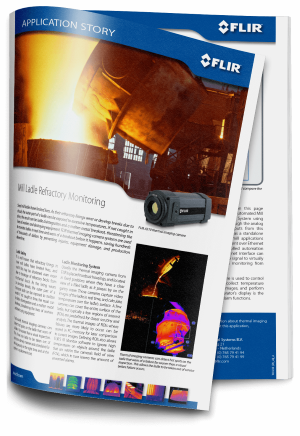
Mill ladle refractory monitoring
Steel manufacturers need to constantly monitor mill ladles for wear to refractory linings and the effects of excessive temperatures on the outer part of a ladle. Learn how thermal imaging camera systems can help warn of a breakout before it happens.
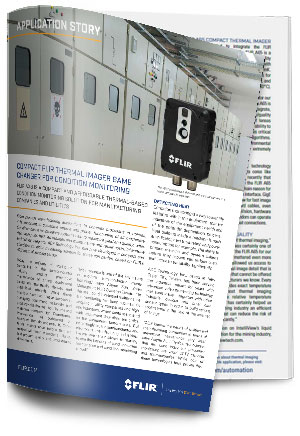 Compact FLIR thermal imager is a game changer for condition monitoring
See how a Taiwanese technology firm is helping industrial firms integrate FLIR condition monitoring cameras with their systems, to provide 24/7 monitoring that protects equipment, and prevents downtime.
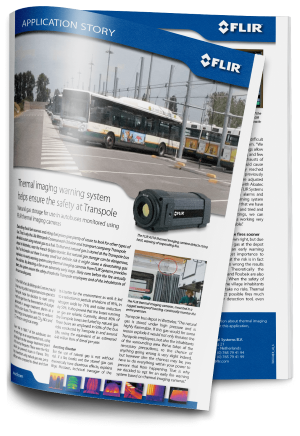
Thermal imaging warning system helps ensure the safety at Transpole
Automatically monitoring temperature changes in fuel storage depots with thermal imaging cameras can avert disaster, satisfy insurer oversight and improve safety for workers and the public.
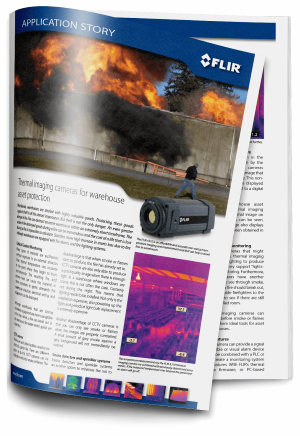
Thermal imaging cameras for warehouse asset protection
Once a warehouse fire starts, asset damage is almost certain. FLIR thermal imaging cameras can identify hot spots before they ignite and provide an early warning response to avoid full-on conflagration before assets are harmed or safety is compromised.
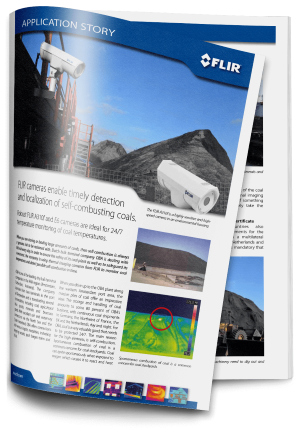
FLIR cameras enable timely detection and localization of self-combusting coals
When coal is exposed to oxygen, it can react and heat up. In this application story, learn how coal terminals are employing fixed thermal cameras to monitor pile temperatures and ventilation.
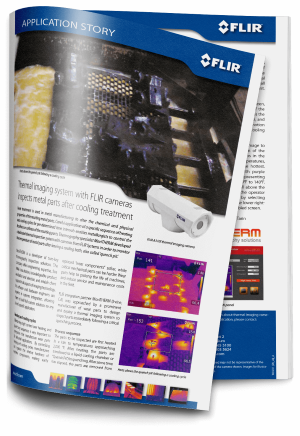
Thermal imaging system with FLIR cameras inspects metal parts after cooling treatment
The sequences of heat treament used in metal manufacturing helps metallurgists control the parts’ hardness or softness. Thermal imaging can be used to monitor the temperature of metal parts after leaving a cooling bath, or “quench pit.”
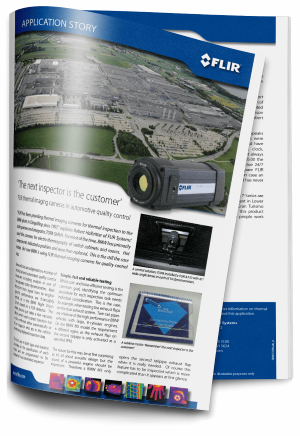
The next inspector is the customer
New vehicles are subjected to many individual and automated quality control tests. Learn why many automobile manufacturers are using thermal imaging cameras for quality control.
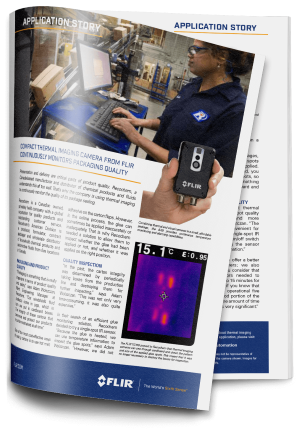
Compact thermal imaging camera from FLIR continuously monitors packaging quality
Presentation and delivery are critical parts of product quality. That’s why manufacturers are starting to use thermal imaging to continuously monitor the quality of their package sealing.
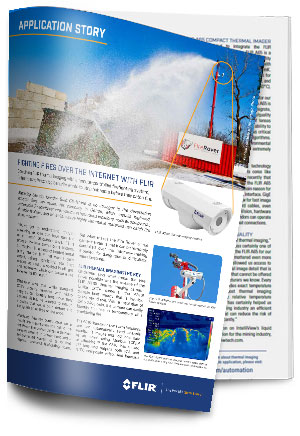 Fighting Fires Remotely with FLIR
Combining FLIR thermal imaging technology with a unique, remote-controlled fire suppression system is helping to stop fires before they break out in hazardous areas, such as scrapyards, shredder facilities, and more.
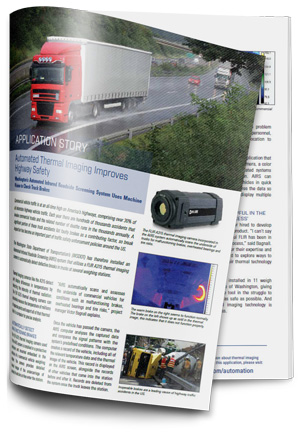 Automated Thermal Imaging Improves Highway Safety
Commercial trucks are involved in hundreds of thousands of highway accidents in the US every year, often because of faulty brakes. One state transportation agency is working to reduce this number by installing automated infrared cameras at weighing stations so they can check for defective brakes before trucks get back on the road.
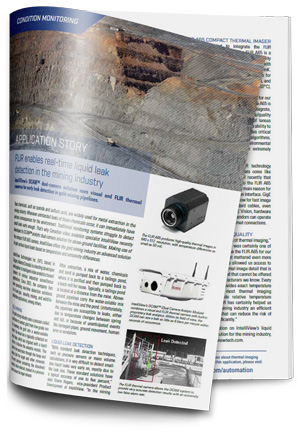 FLIR Enables Real-Time Liquid Leak Detection in the Mining Industry
In the mining industry, there is the potential risk that toxic chemicals used to extract metals could leak into the environment. Spotting these leaks and fixing them quickly is an important, but often difficult, task. In response, a Canadian company built an automated solution around the FLIR A65 that uses temperature to spot surface liquid leaks early, so they can be repaired immediately.
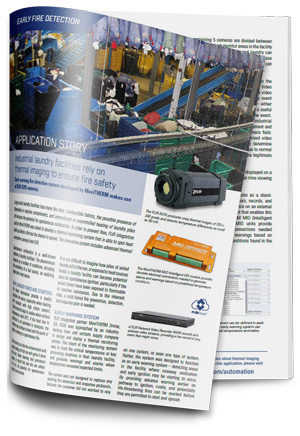 Industrial Laundry Facilities Rely on Thermal Imaging to Ensure Fire Safety
Large-scale laundry facilities face a safety challenge: combustible fabrics and the potential for flammable contaminants and uncontrolled heat raise the risk that laundry piles could catch fire. FLIR integration partner, MoviTHERM, developed a thermal monitoring system that can detect rising temperatures before fire has the chance to spread.